Make Time For Sports.
News
Graeme Swann: What he said, really meant and definitely didn’t
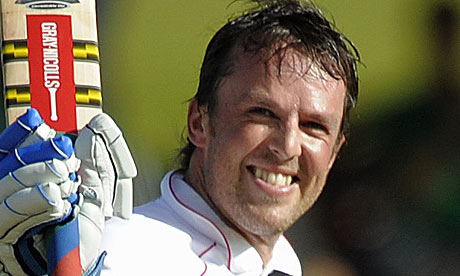
Graeme Swann
What he said:
“We’re happy to tootle along in a two-litre diesel in a Formula 1 race. “
Graeme Swann is still not convinced that Alistair Cook is the best thing to happen to English cricket especially when it comes to ODI cricket.

Cook had responded to his strident criticism thus:
“I don’t think it’s that helpful – especially from a so-called friend.”
Swann, however, continued in the same vein:
“Real mates are honest with each other. I’m no longer in the England dressing room and it is my job now as a pundit to give my honest thoughts.
I texted Cooky after the Test series victory over India saying I was proud of the way he conducted himself but that he should get away from the one-dayers as quickly as possible.
I think being one-day captain is a poisoned chalice for him. He just doesn’t need the job. The cricket England are playing in 50-over cricket is outdated and I fear it will be a painful winter for the team.
I don’t want him to be part of it. This is not a witch-hunt against ‘Cookie’ and I’m still a huge supporter of his captaincy in Test cricket. But, in one-day matches, I want England to play the exciting cricket they promised six months ago when Peter Moores took over as head coach.
We’re happy to tootle along in a two-litre diesel in a Formula One race.
If England do badly in the World Cup Cooky will be back to where he was earlier this summer when some people were waiting for him to mess up. He should be resting now, making sure he is fully recharged for the 17 Test matches England have next year.
I’m 100 per cent behind him as Test captain. I went to his wedding and he offers to send me a turkey each Christmas from his farm. I hope I’m not off his list now!”
What he really meant:
“ODI and T20 cricket is less about strategy,endurance, finesse and technique and more about tactics, fitness and speed. We can hardly have slow coaches chuggin’ along on high-speed rails.”
What he definitely didn’t:
“Just appoint me Cook’s tooter and I’ll change my tune fast enough.”
IS Bindra: What he said, really meant and definitely didn’t
IS Bindra

What he said:
“It’s such a frustrating scenario: One can’t become the chief minister, but one can still become the prime minister! “
IS Bindra, former president of the Punjab Cricket Association (PCA), is acerbic about the current farcical situation; Narayanswamy Srinivasan is unable to preside over the BCCI pending a Supreme Court judgment yet is chairman of the ICC.
The outspoken former BCCI chief recently stepped down as head of the PCA.
He said:
“I haven’t made it easier for Srini … In fact, I’m free to blog and tweet exactly what I want… My hands aren’t tied now…”
On his retirement:
“I’d reached a stage where I felt I couldn’t do anything for cricket in India…
Also, I didn’t want the PCA to suffer because of my strong views on Srini. Mohali should have got a Test against the West Indies, but didn’t. Yet, there are affiliates of the Board who keep getting international matches out of turn…
I’ve helped build the PCA and I’m passionate about it. I couldn’t have allowed it to be penalised because of my convictions. I’ve always respected the primacy of institutions…
Above all, there comes a time in everyone’s life when one has to gracefully retire and move on after having been at the helm of an institution. I couldn’t have been at the PCA forever.”

On Jagmohan Dalmiya:
“I’d expected Jaggu to join me in the fight to oust Srini, but he didn’t do so. It’s for him to explain why. I’m as disappointed with quite a few of the others in the Board who, too, have chosen to stay quiet.”

On Srinivasan’s chances of returning as Board president if the Supreme Court fails to bar him:
“If that’s so, then Srini will win. Who’ll oppose him? For one reason or the other, I don’t see any opposition. Not when the men with influence are silent. I’ve retired as an administrator, but my love for cricket remains undiminished. I’ll gun for whoever tries to harm the game in India. You can be assured.”
What he really meant:
“It’s like you can be President but you can’t be governor. Or you can volunteer but you can’t work.”
What he definitely didn’t:
“Let’s play musical chairs with the Supreme Court, the Pied Piper.”
Mitchell Johnson: What he said, really meant and definitely didn’t

Mitchell Johnson
What he said:
“I’ve been trying to hit as straight as possible instead of hitting across the line. So I’m not going to apologise, but hopefully I didn’t hurt anyone up there.”
Mitchell Johnson is unapologetic for shattering the safety glass pane of the television broadcast box at the Harare Sports Club.
Johnson scored 20 in Australia’s 350-6 against Zimbabwe.
Johnson added:
“I thought it was going to hit, and I was just wondering what it was going to do.I didn’t see it shatter, I just saw some of the commentators brushing away a bit of glass, so it was a good thing it didn’t shatter everywhere and the ball didn’t go through.
I think another window up here (outside the players’ dressing room) had that shattered look to it, and I’m glad no-one got injured out of it.
But it was a good feeling.
I didn’t see the first ball that was bowled to me from the other end, I was just trying to adjust to being out in the middle again but that one felt really nice, right out of the middle.”
The other shattered window Johnson referred to was broken by West Indian Chris Gayle in a T20 fixture several years ago.
Johnson laughed:
“I’m happy to be compared to Chris Gayle. He’s obviously a pretty powerful guy, so if you want to compare me to him that’s fine.”
What he really meant:
“I’m a straight-shooting kind of guy. I bowl straight and fast; I’d like to bat the same way too.”
What he definitely didn’t:
“I’m gunning for the commentators. Would they like to step out and face a few of my lethal deliveries? If not with the bat, then with the red cherry.”
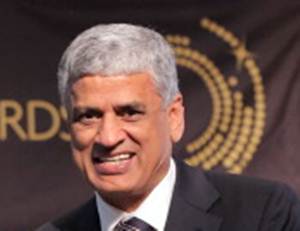
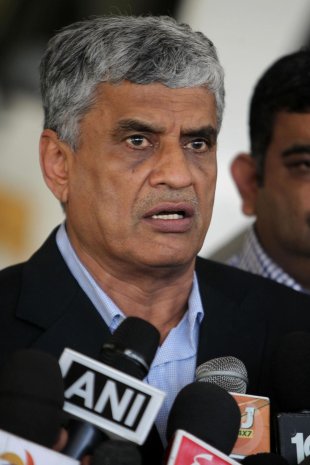
Sanjay Patel: What he said, really meant and definitely didn’t
Sanjay Patel

What he said:
“They can go on holiday, or go back home. They can even come to India if they want.”
BCCI secretary Sanjay Patel minces no words about Team India’s bowling coach Joe Dawes’ and fielding coach Trevor Penney’s options on being relieved of their duties post the disastrous result in the Big Test series against England.
What he really meant:
“What they do now on their own time is none of the BCCI’s business. It’ s a purely professional transaction. They’re hired based on past results and recommendations and fired based on results and feedback. Can they have it any other way? Besides, they deserve a holiday—a well-earned one—and I can recommend no better place to vacation than India.”
What he definitely didn’t:
“How about Tourism India roping in Dawes and Penney as brand ambassadors?”
MS Dhoni: What he said, really meant and definitely didn’t
Mahendra Singh Dhoni
What he said:
“Don’t be so jealous of IPL.”
The Indian skipper was quick to respond to a query from scribes whether Indian players would forsake the IPL and work on their Test game instead by playing county cricket in England.
What he really meant:
“County cricket doesn’t pay that much any more, does it? Besides, it’s an Indian league and why should the Indian players be elsewhere? Will our team owners and the BCCI be agreeable? Also, it’s the cricketers main source of income when they’re not playing for the national squad. Why ruin our fun, our time in the sun?”
What he definitely didn’t:
“The IPL’s like my wife Sakshi to me. You malign her(it) and you’ll have me to deal with.”

Cartoon: Ravi Shastri is the ‘director’

Ravi Shastri has been appointed ‘director’ of the Indian cricket team for the ODI series.
The Big Test: Post-mortem analysis
The carcass that is Indian cricket is laid out on the coroner’s slab. The post-mortem begins afresh.
It all seems to be an exercise in futility.
Every serious Indian cricket lover, ex-cricketer, administrator or even current cricketer knows what ails Indian cricket. But not one wants to make a concrete effort to alter the status quo.
The ‘chalta hai’ attitude comes to the fore.
“All this will change when we play in India on our dust-bowls” is the constant refrain.
And that is how it has panned out. The die-hard fans are consoled by wins eked out at home in conditions that suit flat-track bullies.
And the sponsors are happy all over again and our cricketers are worshiped as demigods once more.
What is wrong with Indian cricket?
Why are our players “Lions at home, lambs abroad”?
It is a combination of several factors.
There exists a paucity of quality fast bowlers to take advantage of conditions abroad because Indian pitches do not encourage them. They prefer to be medium fast rather than bowl their hearts out with little reward.

Diagram showing the correct grip for bowling a fast ball in cricket. (Photo credit: Wikipedia)
Except for Mohali, there are very few pitches that offer the fast bowler any help. It is time that the BCCI drew up a plan to create sporting pitches that will dot all the Test venues in India. It should be a mandate dictated from the top.
Imran Khan wished his team to win abroad and at home in all conditions. He institutionalized a culture of encouraging raw pace as well as facilitated pacy wickets on the north-west Indian sub-continent.
There are no excuse for saying that it cannot be done. Look due north to our ‘Pathan’ neighbours for inspiration.
Fast, bouncy wickets at home would also make sure that our batters adapt quickly to English, Australian or South African ones.
Secondly, the Indian team selection especially for overseas tours has to be such that core players are constantly challenged by the fringe ones. No one should be allowed to rest on their laurels. A place in the side has to be constantly earned. There should be no passengers in the chosen 16.
Fast bowlers should be groomed and rotated so that they do not succumb to injuries.
Additionally, certain batsmen and bowlers with special or limited skills should be set aside for a specific format. You would expect a Ravindra Jadeja or a Stuart Binny to be a useful asset in one-dayers or T-20s. But expecting them to play stellar roles in Tests is wishful thinking. Similarly, Murali Vijay, Cheteshwar Pujara and Ishant Sharma are well-suited for Test cricket only.
A system that rewards format specialists is the need of the hour. The BCCI could look into that.
Yes, the Indian team would do better if they had all-rounders in the side. But the unfortunate truth is there is none of the calibre of a Kapil Dev or even a Manoj Prabhakar. The cupboard is bare.
The Indian Test team is thus better off with six front-line batsmen and five strike bowlers.
The series in Australia will show if the lessons learned from the unmitigated disaster in England have been absorbed.
If not, the Indian cricket fan can expect his cup of woe to overflow. Certainly not a good augury for the World Cup to follow!
Parupalli Kashyap: Asthma, inhalers and Commonwealth gold
http://www.gettyimages.com/detail/139585236
Parupalli Kashyap is the latest male star to bedazzle the Indian badminton circuit.
The Hyderabadi pulled off a minor miracle when he beat Singapore’s Derek Wong to clinch India’s first ever Commonwealth games gold medal in badminton in 32 years. Kashyap trains under Pulella Gopichand, a former All England champion, in his hometown.
Kashyap is in distinguished company. Prakash Padukone and Syed Modi are the only other Indians to have accomplished the said feat.
For the 27-year-old, public recognition may

English: kashyap is a indian badminton player (Photo credit: Wikipedia)
have finally arrived. Indian Men’s badminton, in recent times, has been overshadowed by the exploits of Saina Nehwal, PV Sindhu and Jwala Gutta, their female counterparts.
Kashyap might just be the man to continue Gopichand’s legacy.
The Padma Bhushan awardee won the All England championship in 2001 but knee injuries cut short his promising career in its prime.
At the 2012 London Olympics, Kashyap reached the quarter-finals only to lose to top seed Lee Chong Wei.
Very few are aware that Kashyap is asthmatic.
Morten Frost of Denmark was another badminton great who suffered from asthma.
The lanky Indian athlete has to renew his TUE (Therapeutic Use Exemption) certificate from WADA every year.
Kashyap was diagnosed with the chest ailment in 2005. It almost brought his fledgling career to a standstill.
But the fighter in Kashyap came to the fore.
He says:
“It was a big shock for me. Many thought my career was over. But I was determined to fight back and put in a lot of hard work to overcome the disorder.”
He adds:
“It used to be very, very bad. I used to be sick at every tournament. I had to keep taking antibiotics and I would feel ill all the time.”
Once his condition was diagnosed, the shuttler went from strength to strength.
Kashyap says:
“Before 2005, nobody told me my condition was asthma. But once it was diagnosed and I started the right medication, I grew quickly in strength. I could eat well and I got healthy. I’m still asthmatic and I take medication once a day, but I’m fine otherwise.”
Kashyap carries an inhaler (or two) on court for every game and does extra endurance work.
On asthmatics and sport:
“Basically, asthmatics have to keep on working on endurance. You can’t build it up and stop working on it for a while, like the others. My endurance goes down if I don’t work on it. So I do endurance workouts even during tournaments, when other players don’t.”
At the 2010 Delhi Commonwealth games, Kashyap had clinched bronze defeating compatriot Chetan Anand, perhaps now better known as Jwala Gutta’s ex.
Kashyap was awarded the Arjuna award in 2012.
A little-known fact on Indian men’s badminton: India has more players in the top 100 than any other nation.
Kashyap says:
“That’s a great achievement. But if you want to consistently be in the top 10 or have a number of players winning big titles that is tougher. We have very good bench strength now in men’s singles especially. But going ahead and winning big titles, you need a ten-fold investment.”
Kashyap believes that if he works hard enough he can meet the levels of Lin Dan and Lee Chong Wei, the current top two in the game.
Kashyap’s journey to the top has just begun. Let us hope for many more medals from the young man lighting up an Indian future in the Chinese-dominated sport.
Of Bharat Ratnas, Dhyan Chand and Sachin Tendulkar
The late Major Dhyan Chand is in the news once more this time of year. And again it is connected with speculation that he might be one of the recipients of the Bharat Ratna.
When there was a debate about whether sports persons should be awarded the Bharat Ratna , and if so , who first, yours truly along with many others felt that arguably the world’s greatest hockey player was preeminent among all current and past Indian sports persons.
But the Indian government played to the gallery and awarded the country’s most prestigious award to Sachin Tendulkar on the eve of his retirement from the game.
This is not to deny Mr. Sachin Tendulkar his spot in the sun. God knows, he did not need another award. He is the most beloved of all sports stars on the Indian firmament. But surely Dhyan Chand and his descendants were done a disservice.
Sachin is in the news too; this time for his leave of absence from the Upper House of Parliament. ‘Aap la Sachin’ is not the dedicated parliamentarian—neither posting any questions in the house nor spending his quota of allocated funds for his constituents’ betterment. And now, he has decided to go AWL (Absent With Leave) citing personal and professional commitments.
It does make one wonder if Tendulkar considered the Rajya Sabha selection as just yet another award and not a call to service—a thought echoed by Pradeep Magazine in his column for the Hindustan Times.
The man cannot be solely blamed. Politics is a different kettle of fish—a fact that Amitabh Bachchan can attest to.
Number of readers subscribed
Read it on Apple News

Read it on Apple News
Stat Counter
 Sports, Health and Exercise
- An error has occurred; the feed is probably down. Try again later.
 Make Time For Sports.