Make Time For Sports.
BCCI
AFI, anti-competition and road races in India – I
The Athletics Federation of India (AFI) is anti-competitive.
The sports ministry of India believes so.
Unable to overturn a ban on its athletes participating in unauthorized road races, the ministry has called upon the Competition Commission of India to squash the draconian move by a body that ironically receives funding from the central government.
No athlete affiliated to the AFI is currently allowed to compete without first obtaining clearance from it.
The decision was ratified in its AGM.
“The house unanimously approved to take action against the state units officials athletes and individuals who en courage the unauthorized marathons and become part of such marathons where AFI permission was not taken and it was made mandatory to seek permission of AFI before organizing any road race marathon on national and international level.”
The sports ministry in its complaint termed the move “anti competitive, not conducive to development of sports at grassroots level and was likely to have an adverse impact on promotion of sports and protection of the interest of sportspersons.”
AFI president Adille J Sumariwalla responded:
“We have a meeting with the ministry every 10 days, but nobody has raised this issue with AFI. If the ministry has any problem with AFI, they should discuss the issue with us.”
He also denied that there were any such restrictions on its athletes.
The ministry also claimed that the AFI was only one among many national sports federations resorting to such unethical practices to retain their hegemony.
The ministry also claimed that it was unable to take any action as the AFI was an autonomous body.
The Tribune, in its editorial titled ‘Let People Run‘ , was critical of the AFI.
It read:
“Greed is the root cause of the ongoing conflict between the Athletics Federation of India (AFI) and the organisers of various road races in the country. The AFI wishes to control all athletic competitions. Laughably, it declares that various marathons — like the Mumbai Marathon or Delhi Half Marathon — are its properties. That’s patently false. They are not the AFI’s properties for they’ve been organised and nurtured by private companies like Airtel, Standard Chartered or TCS. The AFI’s role in these races has been restricted to obtaining royalty and capitation fee — running into lakhs of rupees — from the organisers. These races have become extremely popular, attracting celebrities and a very large number of runners. For instance, last year’s Delhi Half Marathon had over 32,000 entries, and over 15 sponsors/partners. The AFI wants a larger chunk of the pie. It’s about money.
It’s not unprecedented for a sports association to desire complete control over a sport in an attempt to completely control the cash inflow. The Indian cricket board (BCCI) did the same when the rebel Indian Cricket League (ICL) was launched by the Zee group in 2007. The BCCI banned all the cricketers who associated with the ICL, which eventually collapsed. But the players benefited from the emergence of competition — the BCCI made a dramatic increase in the wages for the players at the domestic and international levels.
There’s a marked difference between the BCCI and the AFI. The former is an independent society, which now resembles a corporate entity with money-making as an objective. The AFI, though autonomous, can exist and operate only because it’s supported by public funding. The road races, which attract people toward sport, should have been the AFI’s own initiative in the first place. But now it wants to jump in for money. The AFI can’t stop commoners from running, and it must not be allowed to ban the athletes who compete in the races as well.”
The Mid-Day, in a piece titled ‘Marathons: Who’s running the show?‘, expressed concern for elite athletes.
“What this current imbroglio does, though, is throw athletes into a quandary. It is hugely confusing for state and national athletes. Which event do they participate in? Should they take part in a road race that does not have the AFI blessing? Would they even know which events are ‘authorised’ or ‘unauthorised’? Who would be able to tell them?”
The DNA, in an article by Chander Shekhar Luthra, revealed another aspect behind the AFI’s decision.
“………a senior AFI official said on condition of anonymity that the ‘marathon business has been flourishing in India in last one decade and it needs to be regulated in order to check any malpractices’.
In one such non-recognised marathon event, The winner was not given any. And when this athlete complained to the ministry, AFI was asked to file an explanation. The GBM resolution was passed to curb such unethical practices only,’ said the official on Friday.”
The Competition Commission of India website states:
“Competition is the best means of ensuring that the ‘Common Man’ or ‘Aam Aadmi’ has access to the broadest range of goods and services at the most competitive prices. With increased competition, producers will have maximum incentive to innovate and specialize. This would result in reduced costs and wider choice to consumers. A fair competition in market is essential to achieve this objective. Our goal is to create and sustain fair competition in the economy that will provide a ‘level playing field’ to the producers and make the markets work for the welfare of the consumers.
The Competition Act
The Competition Act, 2002, as amended by the Competition (Amendment) Act, 2007, follows the philosophy of modern competition laws. The Act prohibits anti-competitive agreements, abuse of dominant position by enterprises and regulates combinations (acquisition, acquiring of control and M&A), which causes or likely to cause an appreciable adverse effect on competition within India.
Competition Commission of India
The objectives of the Act are sought to be achieved through the Competition Commission of India (CCI), which has been established by the Central Government with effect from 14th October 2003. CCI consists of a Chairperson and 6 Members appointed by the Central Government.It is the duty of the Commission to eliminate practices having adverse effect on competition, promote and sustain competition, protect the interests of consumers and ensure freedom of trade in the markets of India.The Commission is also required to give opinion on competition issues on a reference received from a statutory authority established under any law and to undertake competition advocacy, create public awareness and impart training on competition issues.”
This is not the first time an Indian sports body has been in the cross hairs of the regulatory watchdog.
In 2013, the BCCI was slapped with a Rs.52.24 crore fine for blocking players from opting to participate in competitive league such as Subhash Chandra’s Indian Cricket League (ICL).
The complaint filed by Surinder Singh Barmi, a Delhi-based cricket fan, alleged “irregularities in the grant of Indian Premier League (IPL) franchise rights for team ownership, media rights for coverage of the league, and in the award of sponsorship rights and other local contracts related to the Twenty20 league conducted by BCCI.”
The ruling was later set aside by the Competition Appellate Tribunal (Compat).
Compat said:
“The finding recorded by the Commission on the issue of abuse of dominance is legally unsustainable and is liable to be set-aside because the information downloaded from the net and similar other material do not have any evidentiary value and, in any case, the same could not have been relied upon by the Commission without giving an effective opportunity to the appellant (BCCI) to controvert the same.”
The CCI used information from public sites without disclosing to the BCCI their sources to arrive at a ruling thus vitiating the rule “audi alteram partem (let the other side be heard as well).”
To be continued…
Supreme Court: What they said, really meant and definitely didn’t
Supreme justice for N Srinivasan.
What they said:
“Individuals are birds of passage while institutions are forever.”
The Supreme Court bench of Justices T S Thakur and F M I Kalifulla read N Srinivasan his rights in a ruling that effectively prevents him contesting for the BCCI top post.
The judges ruled out any person having a commercial interest in BCCI events from being a part of the governing body. Srinivasan has a controlling interest in Chennai Super Kings, an IPL team.
They said:
“The BCCI is a very important institution that discharges important public functions. Demands of institutional integrity are, therefore, heavy and need to be met suitably in larger public interest. Individuals are birds of passage while institutions are forever.
The expectations of the millions of cricket lovers in particular and public at large in general have lowered considerably the threshold of tolerance for any mischief, wrong doing or corrupt practices which ought to be weeded out of the system.”
What they really meant:
“…birds of passage…..And your time is past, Mr. Srinivasan. You are not the BCCI and the BCCI is not you.”
What they definitely didn’t:
“Could we have a couple of freebies to the CSK games, Mr. Srinivasan, please?”
MS Dhoni: What he said, really meant and definitely didn’t
Mahendra Singh Dhoni couldn’t be spicier with his final words as Test captain.
What he said:
“Now, even PETA has said that you can’t cosmetically remove the tail.”
Responding to a scribe’s question, “Their (Australia’s) tail is like Hanuman’s. Yours is like a Doberman’s. That must be hurting your side,” India’s outgoing skipper replied:
“Now, even PETA has said that you can’t cosmetically remove the tail. It has been a big problem for us that we don’t have a genuine allrounder. We have tried to play six batsmen and five bowlers before, but then the tail becomes as long as a cow’s … Hopefully, if we can find an allrounder, the tail problem will be resolved. But the tail problem is really a big problem.”
The man who brought back the World Cup to India remarked thus when asked to compare the two whitewashes of 2011 and 2011-12:
“You die, you die; you don’t see which is a better way to die. You end your Test career, you end your Test career. You don’t see which is a better way to end your Test career.”
What he really meant:
“There’s nothing pleasing about the way the Indian tail disintegrates in the face of aggression. Nothing cosmetic about it for sure.”
What he definitely didn’t:
“The Indian tail proudly announces the formation of a new body, PETT—People for the Ethical Treatment of Tail-enders.”
Bharat Arun: What he said
Bharat Arun is quite the psychologist.

English: Robert Plutchik’s Wheel of Emotions (Photo credit: Wikipedia)
What he said:
“Sometimes, being over-aroused is as bad as being under-aroused.”
Team India’s new bowling coach, Bharat Arun, has the readers flummoxed.
What is he talking about?
The Personal Development, Health and Physical Education (PDHPE) at the New South Wales Education and Communities website defines Optimum Arousal thus:
“While anxiety is predominately a psychological state, arousal refers to a physiological state. Arousal can be described as the degree of energy release and the intensity of readiness of the performer or as drive or excitation. There are levels of arousal that can produce optimal performance depends on the sport and the individual. Arousal is a necessary ingredient in sports performance, although its level can wither, facilitate or hinder the execution of specific skills or task components. Arousal levels vary on a continuum from deep sleep to high excitement.
Optimal arousal does not mean maximal arousal. Both over-arousal and under-arousal can contribute to poor performance. An individual will perform a skill most successfully when the level of arousal is optimal for that particular task. A poor performance may be due to low level of arousal, perhaps resulting from distraction, disinterest or a depressed level of motivation. The other end of the spectrum is a state of over-arousal, whereby the athlete is unable to perform the required movement with precision because he/she is excessively tense and unable to concentrate.
Levels of arousal vary considerably between individuals and they respond to different stimuli to raise or lower their levels of arousal. Arousal has drive properties, meaning that the manipulation of factors that affect anxiety can increase or decrease arousal. Generally, athletes who have a high disposition towards anxiety require less arousal than those who have a low disposition towards anxiety.”
Arun was responding to Ravichandran Ashwin being a “very intense cricketer.”
Arun added:
“There is an optimum level of arousal that a player needs to maintain, and that’s what we mean by controlled aggression. When you get too deep into something, you don’t see the little but important things around you. We keep reminding him not to get there and help him maintain the optimum arousal level. Once we do that, he is okay.”
IS Bindra: What he said, really meant and definitely didn’t
IS Bindra

What he said:
“It’s such a frustrating scenario: One can’t become the chief minister, but one can still become the prime minister! “
IS Bindra, former president of the Punjab Cricket Association (PCA), is acerbic about the current farcical situation; Narayanswamy Srinivasan is unable to preside over the BCCI pending a Supreme Court judgment yet is chairman of the ICC.
The outspoken former BCCI chief recently stepped down as head of the PCA.
He said:
“I haven’t made it easier for Srini … In fact, I’m free to blog and tweet exactly what I want… My hands aren’t tied now…”
On his retirement:
“I’d reached a stage where I felt I couldn’t do anything for cricket in India…
Also, I didn’t want the PCA to suffer because of my strong views on Srini. Mohali should have got a Test against the West Indies, but didn’t. Yet, there are affiliates of the Board who keep getting international matches out of turn…
I’ve helped build the PCA and I’m passionate about it. I couldn’t have allowed it to be penalised because of my convictions. I’ve always respected the primacy of institutions…
Above all, there comes a time in everyone’s life when one has to gracefully retire and move on after having been at the helm of an institution. I couldn’t have been at the PCA forever.”

On Jagmohan Dalmiya:
“I’d expected Jaggu to join me in the fight to oust Srini, but he didn’t do so. It’s for him to explain why. I’m as disappointed with quite a few of the others in the Board who, too, have chosen to stay quiet.”

On Srinivasan’s chances of returning as Board president if the Supreme Court fails to bar him:
“If that’s so, then Srini will win. Who’ll oppose him? For one reason or the other, I don’t see any opposition. Not when the men with influence are silent. I’ve retired as an administrator, but my love for cricket remains undiminished. I’ll gun for whoever tries to harm the game in India. You can be assured.”
What he really meant:
“It’s like you can be President but you can’t be governor. Or you can volunteer but you can’t work.”
What he definitely didn’t:
“Let’s play musical chairs with the Supreme Court, the Pied Piper.”
Sanjay Patel: What he said, really meant and definitely didn’t
Sanjay Patel

What he said:
“They can go on holiday, or go back home. They can even come to India if they want.”
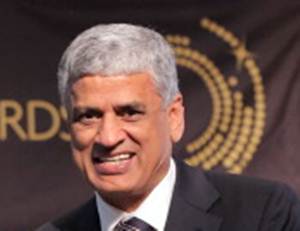
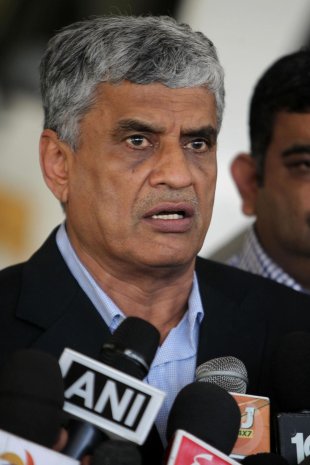
BCCI secretary Sanjay Patel minces no words about Team India’s bowling coach Joe Dawes’ and fielding coach Trevor Penney’s options on being relieved of their duties post the disastrous result in the Big Test series against England.
What he really meant:
“What they do now on their own time is none of the BCCI’s business. It’ s a purely professional transaction. They’re hired based on past results and recommendations and fired based on results and feedback. Can they have it any other way? Besides, they deserve a holiday—a well-earned one—and I can recommend no better place to vacation than India.”
What he definitely didn’t:
“How about Tourism India roping in Dawes and Penney as brand ambassadors?”

Cartoon: Ravi Shastri is the ‘director’

Ravi Shastri has been appointed ‘director’ of the Indian cricket team for the ODI series.
The Big Test: Post-mortem analysis
The carcass that is Indian cricket is laid out on the coroner’s slab. The post-mortem begins afresh.
It all seems to be an exercise in futility.
Every serious Indian cricket lover, ex-cricketer, administrator or even current cricketer knows what ails Indian cricket. But not one wants to make a concrete effort to alter the status quo.
The ‘chalta hai’ attitude comes to the fore.
“All this will change when we play in India on our dust-bowls” is the constant refrain.
And that is how it has panned out. The die-hard fans are consoled by wins eked out at home in conditions that suit flat-track bullies.
And the sponsors are happy all over again and our cricketers are worshiped as demigods once more.
What is wrong with Indian cricket?
Why are our players “Lions at home, lambs abroad”?
It is a combination of several factors.
There exists a paucity of quality fast bowlers to take advantage of conditions abroad because Indian pitches do not encourage them. They prefer to be medium fast rather than bowl their hearts out with little reward.

Diagram showing the correct grip for bowling a fast ball in cricket. (Photo credit: Wikipedia)
Except for Mohali, there are very few pitches that offer the fast bowler any help. It is time that the BCCI drew up a plan to create sporting pitches that will dot all the Test venues in India. It should be a mandate dictated from the top.
Imran Khan wished his team to win abroad and at home in all conditions. He institutionalized a culture of encouraging raw pace as well as facilitated pacy wickets on the north-west Indian sub-continent.
There are no excuse for saying that it cannot be done. Look due north to our ‘Pathan’ neighbours for inspiration.
Fast, bouncy wickets at home would also make sure that our batters adapt quickly to English, Australian or South African ones.
Secondly, the Indian team selection especially for overseas tours has to be such that core players are constantly challenged by the fringe ones. No one should be allowed to rest on their laurels. A place in the side has to be constantly earned. There should be no passengers in the chosen 16.
Fast bowlers should be groomed and rotated so that they do not succumb to injuries.
Additionally, certain batsmen and bowlers with special or limited skills should be set aside for a specific format. You would expect a Ravindra Jadeja or a Stuart Binny to be a useful asset in one-dayers or T-20s. But expecting them to play stellar roles in Tests is wishful thinking. Similarly, Murali Vijay, Cheteshwar Pujara and Ishant Sharma are well-suited for Test cricket only.
A system that rewards format specialists is the need of the hour. The BCCI could look into that.
Yes, the Indian team would do better if they had all-rounders in the side. But the unfortunate truth is there is none of the calibre of a Kapil Dev or even a Manoj Prabhakar. The cupboard is bare.
The Indian Test team is thus better off with six front-line batsmen and five strike bowlers.
The series in Australia will show if the lessons learned from the unmitigated disaster in England have been absorbed.
If not, the Indian cricket fan can expect his cup of woe to overflow. Certainly not a good augury for the World Cup to follow!
Of Bharat Ratnas, Dhyan Chand and Sachin Tendulkar
The late Major Dhyan Chand is in the news once more this time of year. And again it is connected with speculation that he might be one of the recipients of the Bharat Ratna.
When there was a debate about whether sports persons should be awarded the Bharat Ratna , and if so , who first, yours truly along with many others felt that arguably the world’s greatest hockey player was preeminent among all current and past Indian sports persons.
But the Indian government played to the gallery and awarded the country’s most prestigious award to Sachin Tendulkar on the eve of his retirement from the game.
This is not to deny Mr. Sachin Tendulkar his spot in the sun. God knows, he did not need another award. He is the most beloved of all sports stars on the Indian firmament. But surely Dhyan Chand and his descendants were done a disservice.
Sachin is in the news too; this time for his leave of absence from the Upper House of Parliament. ‘Aap la Sachin’ is not the dedicated parliamentarian—neither posting any questions in the house nor spending his quota of allocated funds for his constituents’ betterment. And now, he has decided to go AWL (Absent With Leave) citing personal and professional commitments.
It does make one wonder if Tendulkar considered the Rajya Sabha selection as just yet another award and not a call to service—a thought echoed by Pradeep Magazine in his column for the Hindustan Times.
The man cannot be solely blamed. Politics is a different kettle of fish—a fact that Amitabh Bachchan can attest to.
Number of readers subscribed
Read it on Apple News

Read it on Apple News
Stat Counter
 Sports, Health and Exercise
- An error has occurred; the feed is probably down. Try again later.
 Make Time For Sports.