Make Time For Sports.
ravi shastri
IPL 2015: A big tamasha that could be better
Have you been following IPL 8?
Be truthful.
I haven’t.
Embed from Getty Images
It’s not that cricket doesn’t excite me or that watching Chris Gayle or AB DeVilliers clobber bowlers to all parts of the ground and beyond isn’t a thrilling spectacle.
It’s just that it’s no longer interesting, it’s no longer fun.
It’s a surfeit of instant cricket following closely on the heels of the 2015 World Cup.
Yes, the cheerleaders are pleasing to look at; so are Archana Vijay and Shibani Dandekar.
However, it’s simply the same old package with very little changing.

Ravi Shastri, former Indian cricketer. 4 Test series vs Australia at Adelaide Oval (Photo credit: Wikipedia)
The only positive change is the recruiting of former women cricketers as expert commentators.
I support Mumbai Indians.
But Rohit Sharma’s men simply don’t evoke the same passion that the Indian cricket team does.
What is the IPL then? A great Indian tamasha. Enjoy with bhel and popcorn and you won’t suffer from indigestion.
As for the genius who decided that the studio experts should have cheerleaders lauding their every soundbyte, he should have his head examined.
It’s obvious that advertisers have not deserted the Indian Premier League as yet.
But more of such hare-brained shenanigans and they surely will.
Ravi Shastri: What he said, really meant and definitely didn’t
Ravi Shastri sanctifies the dressing room and makes it a holy shrine.
What he said:
“For me, sitting in the dressing room is all about pride. This room is like a mosque, temple, gurdwara, church, you name it. It’s a sacred place.”
The Indian team director, Ravi Shastri, is quite clear that the team dressing room should be off-limits.
He added:
“When you’re playing for your country, there are just 14 or 15 players there and you should know what that means. I’m a big one for understanding and preserving the sanctity of the dressing room. When I enter it, my hair stands on end. The day I finished playing cricket I never went into the dressing room. That’s why I also believe no one – barring the players – should be allowed in unless he has a good reason to be there.”
What he really meant:
“No sneaking girl-friends or bookies into the dressing room either, chum. “
What he definitely didn’t:
“All this came to me after meditating heavily.Where else, but in the dressing room!”
Ravi Shastri: What he said, really meant and definitely didn’t
Ravi Shastri has cricket on his mind.
What he said:
“I’ve watched more cricket than I’ve played. So there’s enough in this upper-storey here (pointing to his forehead) that can be used before I forget it.”
Ravi Shastri eases into his new role as Team Director. The cricketer-turned-commentator believes that he can contribute not just from his playing experience but from observing as well.
He said:
“I have already started talking to them [the selection committee] and we have no issues on that. My job is not to select an Indian cricket team, it is their job, but my job is to at least communicate with them and see on what lines they are [thinking] so that we both are on the same page. Probably discuss talent, discuss what would be the kind of team you need in Australia.
See, combinations are very important. You have got to identify your strengths and see who are the right people to manage those roles and areas of your strengths. That importantly comes up with the team. Prime importance, I believe, will always be given to current form. I think form is very important.
My job is to communicate with whoever is there and I will not take a step back. At the moment, I have been communicating with all the five.”
He added:
“My job [as director] is to ensure that everything is in order. It’s not just about communicating with the players. It’s also about giving your views, your inputs as a former player, and as a broadcaster. I’ve watched more cricket than I’ve played. So there’s enough in this upper-storey here (pointing to his forehead) that can be used before I forget it. That’s what I tell the players. Don’t be afraid to ask me questions, because there’s enough there for me to be able to contribute. Yes, obviously you’ll have to have a dialogue with the selectors as to where they’re coming from and what their train of thought is. What we feel as part of the Indian cricket team, so that there’s healthy communication and you get something that’s best for the Indian cricket team.”
On working with Duncan Fletcher and MS Dhoni:
“Absolutely, he is brilliant. He is a seasoned campaigner. He has over 100 Test matches as a coach for various teams. The good thing is Fletch and me go a long way back. We know each other. I captained the U-25 team against Zimbabwe in 1984 when he was the captain of Zimbabwe. He has got a fabulous track record. It is how we use the knowledge that he has in the best possible way and communicate with the players.
The boss is the captain on the cricket field. I am in charge of the coaching staff. That’s put into place. My job is to oversee things and see things go all right. Who cares who’s the boss? At the end of the day, you win and to hell with it, yaar. Jisko boss banna hai bano. [Whoever wants to be the boss, let him do so].”
What Shastri really meant:
“Now that I’m director I’ll be able to force the players to work on my freely provided suggestions from the commentary box. Theory becomes practice, eh?”
What he definitely didn’t:
“Now this is what I call life coming full circle: From player to commentator to super-super coach!”
Ravi Shastri: What he said, really meant and definitely didn’t
Ravi Shastri foresaw what Sunil Narine did not see coming.
What he said:
“He treated the threat of ban as he views the charge of batsmen ill-advised dashes which could only result in failure.”
Ravi Shastri comments as to why Sunil Narine failed to read the tea leaves and continued his suspect action despite being warned by the Champions League Technical Committee. The West Indian off-spinner and Kolkata Knight Riders stalwart was called again in the Champions League semi-final and will warm the benches for the final against Chennai Super Kings.
Shastri said:
“He might have been emboldened by a fresh set of officials for the semifinals. Or he might have seen the swell of support from his teammates as his validation. Once you are indestructible, you sense you are indestructible at all levels.
Narine now has cost his team its most lethal weapon for the finals. His international career for the moment is unimpeded, but he can’t be dismissive of the threat like he has been in the Champions League. He can’t allow this shadow to lengthen on the IPL door.”
What he really meant:
“Sunil, perhaps, felt it was a one-off or that he could do nothing about his action overnight . Besides, the pressure to perform and keep bagging wickets for the side is too much to allow one to think through the consequences of one’s action (sic). Just because you have a cheerleading squad rooting your every ball doesn’t mean you can chuck. Check that action, Narine.”
What he definitely didn’t literally sing:
“The banned didn’t see it coming.”
Ravi Shastri: What he said, really meant and definitely didn’t
Ravi Shastri
What he said:
“Narine makes you no better than a blind, a lame or a mentally challenged person. Compared to him, video games are a child’s play.”
Ravi Shastri attributes Kolkata Knightriders’ stupendous show at the Champion Leagues T20 to one man, Sunil Narine. The West Indian mystery bowler continues to bamboozle his opponents.
Shastri said:
“While everything on this Earth is being figured out, Narine it seems is a mystery forever. It’s not that batsmen can’t see him or watch the ball fizz out of his hand.But what they perceive and how the delivery behaves are two opposites.”
Shastri—writing further—said:
“Rivals thus end up playing 16 to KKR’s 20 overs. The handicap of one-fifth of overs is too big to overcome in a format where a win is often secured off the last ball and a margin of 5-10 runs is routine. The related effect of batsmen giving wanton charge to other bowlers and rushing to their doom is less appreciated.”
What he really meant:
“The opposing bats are like handicapped golfers—at a disadvantage before they begin.”
What he definitely didn’t:
“What’s West Indies doing with a world-class spinner? Aren’t they supposed to have burly, fearsome pacers instead? And if he’s so good, why aren’t they winning more?”
Sanjay Patel: What he said, really meant and definitely didn’t
Sanjay Patel

What he said:
“They can go on holiday, or go back home. They can even come to India if they want.”
BCCI secretary Sanjay Patel minces no words about Team India’s bowling coach Joe Dawes’ and fielding coach Trevor Penney’s options on being relieved of their duties post the disastrous result in the Big Test series against England.
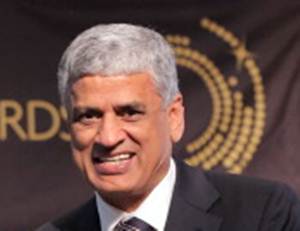
What he really meant:
“What they do now on their own time is none of the BCCI’s business. It’ s a purely professional transaction. They’re hired based on past results and recommendations and fired based on results and feedback. Can they have it any other way? Besides, they deserve a holiday—a well-earned one—and I can recommend no better place to vacation than India.”
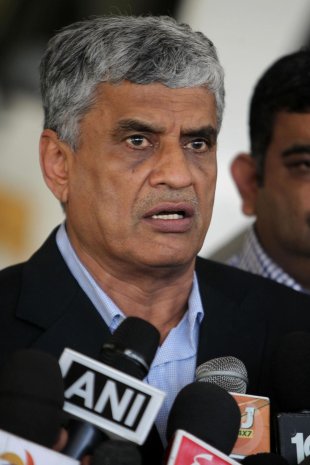
What he definitely didn’t:
“How about Tourism India roping in Dawes and Penney as brand ambassadors?”

Cartoon: Ravi Shastri is the ‘director’

Ravi Shastri has been appointed ‘director’ of the Indian cricket team for the ODI series.
Ravi Shastri and Sunil Gavaskar serving two masters?
“No man can serve two masters.Either he will hate the one and love the other, or he will be devoted to the one and despise the other.”
That’s what the Good Book states.
An article in Outlook India highlighted the inherent conflict of interest in the job profiles of Sunil Gavaskar and Ravi Shastri when they (supposedly) provide unbiased, expert comments on games involving India while at the same time they are contracted directly to the Board for Cricket Control in India (BCCI).
Santosh Desai: What he said, really meant and definitely did not
What he said:
“The BCCI is a banana republic, it answers to no regulatory body.”
Santosh Desai, a social commentator, is under no illusions about how the BCCI conducts business. He was commenting on the conflict of interest inherent in Sunil Gavaskar and Ravi Shastri contracted to the BCCI while offering their opinions for Sky Television.
What he really meant:
“The BCCI is a banana republic; working with it is akin to trying to retain one’s balance while treading a banana skin.”
What he definitely didn’t:
“Sunil Gavaskar and Ravi Shastri endorse plantains for the BCCI.”
Number of readers subscribed
Read it on Apple News

Read it on Apple News
Stat Counter
 Sports, Health and Exercise
- An error has occurred; the feed is probably down. Try again later.
 Make Time For Sports.